


Article Published in News 18 in conversation with Dr. Sulabhi Shyam
For years, most wellness routines have revolved around two pillars: skincare and fitness. Every morning, serums are layered onto the face with the precision of a chemist, and every evening, workouts are logged almost like sacred rituals. Meanwhile, teeth are often brushed on autopilot, with oral care treated as a chore rather than a discipline worth refining.
Often, it takes a routine dental visit revealing early signs of gum inflammation to prompt a reconsideration of this hierarchy. Once you begin exploring the science, the evidence becomes compelling: oral care is not a peripheral habit, it is a foundational one that deserves equal attention alongside the rituals you already prioritise.
What Does Your Mouth Reveal About Your Overall Health?
Your mouth is remarkably communicative, often signalling problems long before other parts of your body do. A growing body of research suggests that oral health is closely linked to overall health, meaning what happens in your mouth rarely stays confined there. Brushing, flossing and maintaining healthy gums should therefore be viewed as investments in your overall wellbeing, not just your smile.
Inflamed gums, for instance, may indicate a bacterial imbalance that, if left untreated, can contribute to inflammation elsewhere in the body. Research has also explored links between poor oral health and cardiovascular disease, diabetes and cognitive decline, highlighting why oral hygiene deserves to be part of a holistic wellness routine.
According to Dr Sulabhi Shyam, Oral-B Dental Expert, the mouth often serves as one of the body’s earliest warning systems.
“Your mouth isn’t just about appearances; it is the gateway to your entire body and plays a critical role in your overall health. When we examine a patient’s mouth, we aren’t just looking at teeth, we’re often looking at early signs of broader health concerns. Chronic oral inflammation can contribute to systemic inflammation, which has been linked to cardiovascular health, metabolic balance and overall wellbeing. Good oral hygiene is not simply about preserving a beautiful smile; it is an important preventive health practice.”
Neglecting oral care doesn’t simply increase the risk of cavities or gum disease. Over time, it may also affect broader aspects of health, making oral hygiene an essential, not optional, part of self-care.
How Can You Make Oral Care Part of Your Wellness Routine?
Improving your oral care routine doesn’t necessarily require a complete overhaul. More often, it begins with consistency and intention.
Brushing twice a day for the dentist-recommended two minutes, flossing regularly and scheduling routine dental check-ups remain the foundations of good oral health. Much like skincare, the benefits come from small daily habits practised consistently over time.
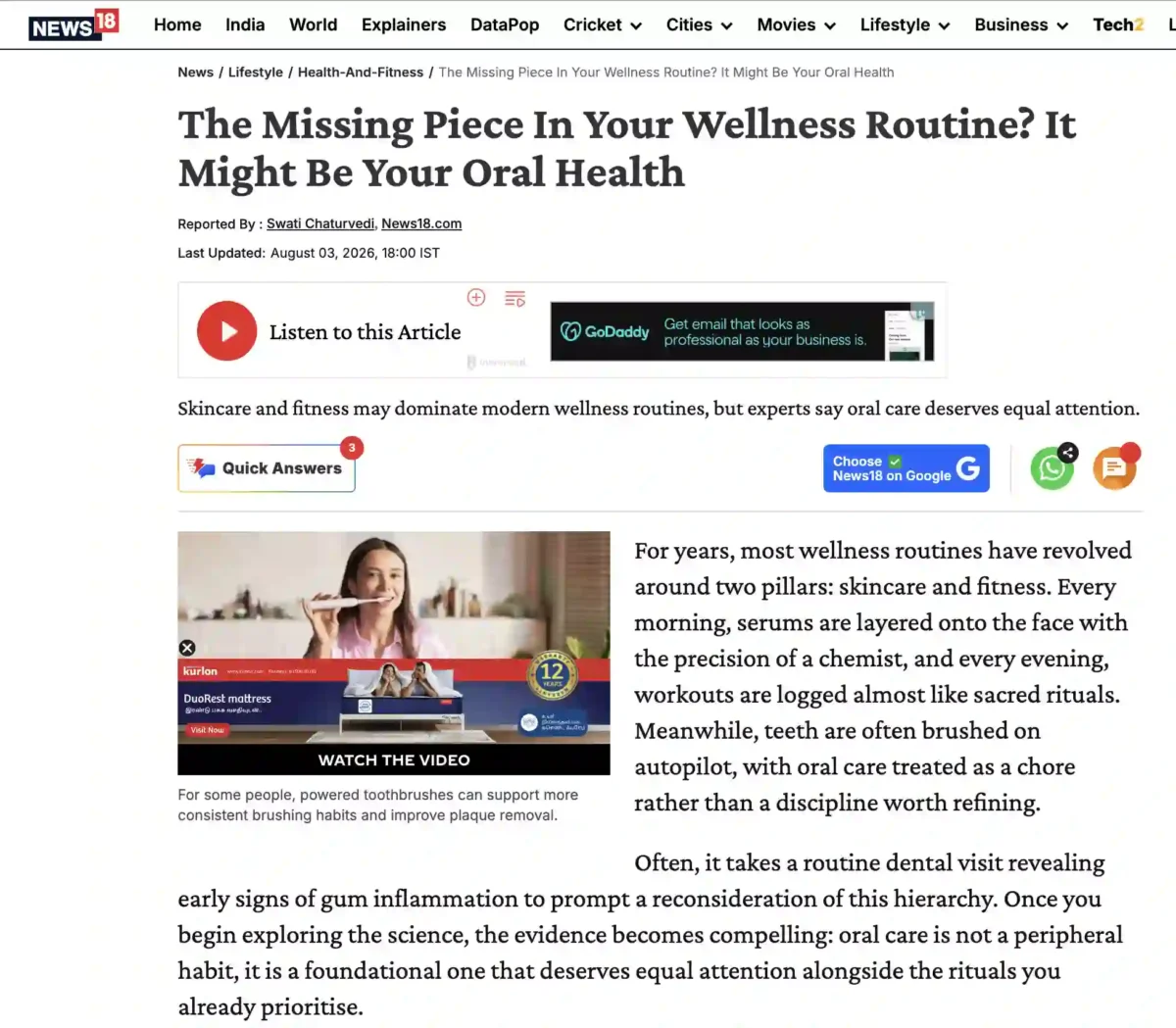
For some people, upgrading their brushing tools may also make a meaningful difference. While a manual toothbrush can be highly effective when used correctly, many powered toothbrushes are designed to make brushing more consistent by helping remove plaque efficiently and encouraging better technique.
Several modern models also include features such as pressure sensors that alert users if they’re brushing too hard and built-in timers that help ensure the full two minutes of brushing recommended by dentists. These features can support healthier brushing habits, particularly for people who tend to rush through their routine or apply excessive pressure.
Combined with daily flossing and regular professional cleanings, these small improvements can contribute to better oral health over time.
What Does a Truly Holistic Wellness Routine Look Like?
Wellness is no longer viewed as a collection of isolated habits. Instead, it is increasingly understood as an interconnected system in which nutrition, movement, sleep, mental wellbeing and preventive healthcare all influence one another.
Oral health deserves to be part of that conversation.
Whether that means refining your brushing technique, flossing more consistently, attending regular dental check-ups or using tools that help improve your routine, the goal remains the same: protecting your long-term health through everyday habits.
After all, true wellness doesn’t begin only with glowing skin or physical fitness. It begins with caring for every part of your body, including the one that often gets overlooked the most.